


Go Hero Go — Roguelike RPG
Puzzle Point Ltd
I went into Go Hero Go — Roguelike RPG expecting a quick fantasy board-game experiment, and that is exactly where its appeal starts. It is an adventure game from Puzzle Point Ltd that combines a magical setting with roguelike decision-making and role-playing flavor. The store summary calls it a magical roguelike RPG board game, but the more useful way to understand it is as a game built around short choices, changing risk, and the feeling that every move can alter the shape of a run.
My first impression was less about spectacle and more about mood. The game wants to make a compact journey feel important. Its “Go Hero Go” identity is simple, direct, and energetic, while the board-game structure gives the adventure a deliberate pace instead of turning it into a purely reflex-based experience. I found that combination easy to pick up when I wanted something lighter than a large action RPG, but still more engaging than a completely passive time-filler.
Go Hero Go — Roguelike RPG is free to download, with optional in-app purchases ranging from $0.99 to $99.99 per item. It is rated for Everyone, which makes it approachable for a broad audience, although the roguelike format still asks players to accept setbacks and uncertain outcomes. The game has an average rating of 4.4 from around 500 ratings, and it has passed 100K installs. Those figures suggest a modest but interested player base rather than a massive mainstream phenomenon.
A small fantasy world with a clear visual voice
The strongest part of the presentation is the way the game treats its board as more than a menu of destinations. A board-game adventure needs to make progress readable, and the fantasy presentation helps each step feel like part of a journey rather than a disconnected list of encounters. The setting is magical without needing to bury the player under lengthy explanations. I could understand the basic promise quickly: move forward, make decisions, deal with danger, and try to build a better run the next time.
That restraint works in the game’s favor. Many mobile role-playing games use a crowded interface, a long stream of rewards, and several currencies to create constant activity. Here, the board-game framing gives the experience a more focused identity. The visual language encourages me to look at the route and think about what might happen next instead of treating every screen as an invitation to collect something.
Related News






The art direction also supports the game’s intended audience. It feels friendly enough for players who are new to roguelikes, but it does not remove the central tension of losing progress or making a poor choice. That balance matters. A colorful fantasy surface can make a game look harmless, yet a roguelike structure is only satisfying when decisions carry some weight. The presentation makes those risks easier to approach without pretending they are not there.
One practical tip is to pay attention to the board as a planning tool rather than rushing through it. In a conventional action adventure, I often react to enemies first and think about consequences afterward. In this game, the better habit is to read the route, consider what kind of challenge may be ahead, and treat movement as part of the strategy. Even when a run is short, that change in mindset gives the board a purpose.
Why the setting works better than a heavier story would
I do not think this is the right choice for someone searching for a deep narrative RPG with long conversations, elaborate character histories, or a large explorable map. Its world works through atmosphere and structure more than through a novel-length plot. That is not a weakness by itself. In fact, the lighter storytelling keeps the game moving and lets the player concentrate on the run.
Gallery
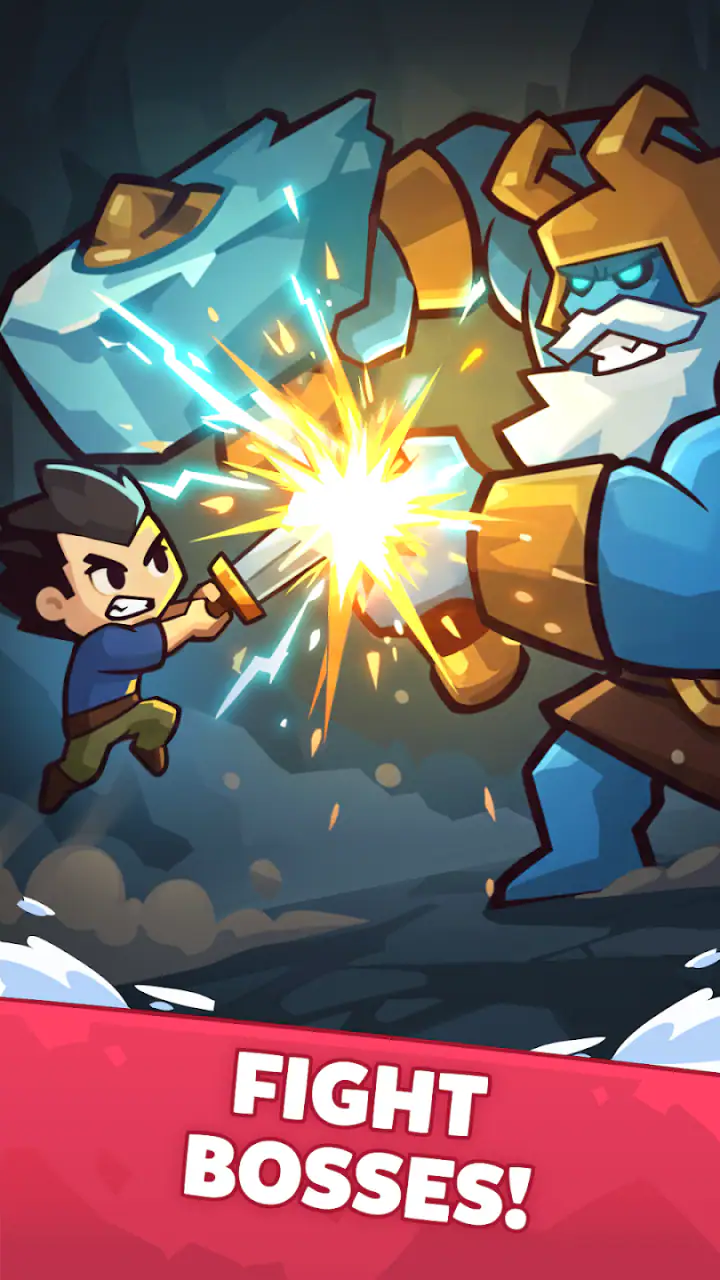
The trade-off is that players who need strong emotional attachment to a cast may find the experience less involving. The fantasy setting establishes a mood, but the main pleasure comes from how the adventure unfolds through play. I enjoyed that because it made the game easy to return to in small sessions. If your preferred adventure games are built around cinematic scenes and carefully scripted surprises, this board-game approach may feel too abstract.
The visual design is also useful when playing on a phone. Clear fantasy cues help separate the adventure from the surrounding interface, while the board format gives the screen a natural focal point. I did not feel that the game needed a huge amount of visual detail to communicate its purpose. Its identity comes from combining a readable route with a magical atmosphere, not from trying to imitate a console-scale production.
Sound, pacing, and the feeling of a complete run
The game’s mood depends heavily on pacing. A roguelike board adventure can become tiring if every decision is stretched out, but it can also feel empty if the player is pushed through too quickly. The most convincing moments come when the rhythm leaves enough space to consider the next step without making a short session feel slow. That makes it suitable for the kind of play I associate with mobile gaming: a few minutes while waiting, a break between tasks, or a longer session when I want to repeat a run.
The sound design supports that rhythm by reinforcing the fantasy setting rather than competing with it. I prefer this kind of approach in a board-style game. Loud, constant effects would make every action feel equally important, while a more controlled audio layer allows the player to notice when something has changed. Sound is at its best here when it gives movement and encounters a sense of presence without turning the game into an exhausting stream of noise.
For everyday use, I would play with audio enabled when I wanted the full atmosphere and lower it when I was treating the game as a quick diversion. That distinction is useful because the game’s visual structure remains understandable even when I am not giving it my complete attention. Still, players who enjoy games mainly for rich soundtracks may find the board-game format less musically expansive than a traditional adventure title.
The pacing also affects how I judge failure. In a long RPG, losing progress can feel frustrating because it may represent hours of investment. A compact roguelike run makes failure easier to accept, provided the next attempt begins quickly and offers a reason to try a different approach. That loop is central to the game’s mood: the adventure is not only about reaching the end, but also about learning how the route behaves and becoming more careful with future choices.
A realistic mobile scenario
Imagine that I have ten minutes before leaving for an appointment. I can start a run, make a few meaningful decisions, and stop without needing to remember a complicated story thread. Later, I can return with the general goal of handling the route more intelligently. That is where the game fits naturally into a phone library. It offers more involvement than a simple puzzle round, but it does not demand the uninterrupted attention of a large open-world adventure.
There is a limit to that convenience. If I am tired or distracted, the decision-based structure can feel less relaxing than an idle game or a straightforward match-three title. The game asks me to participate. Its short-session strength is not that it becomes mindless, but that it keeps the scale of the adventure manageable.
Where the roguelike and board-game ideas meet
The mechanical fit is the most important question for anyone choosing this game. A roguelike structure usually depends on uncertainty, repeated attempts, and the need to adapt rather than follow one perfect script. The board-game layer gives those ideas a physical-feeling shape: progress is represented as movement through a route, and the player’s attention naturally shifts toward the next decision.
I found this combination more approachable than a traditional roguelike built around fast combat or complex menus. The board makes the adventure legible. Instead of needing to memorize a large map, I can focus on the immediate path and the consequences attached to it. That makes the game a reasonable entry point for someone curious about roguelikes but not ready for a punishing action game.
At the same time, experienced roguelike players may want more depth than the board structure alone can provide. The appeal depends on whether the available choices feel meaningful over repeated attempts. If you enjoy discovering elaborate builds, mastering demanding combat, or studying highly detailed systems, a deeper specialist roguelike will probably offer more long-term complexity. I would choose this title for accessibility and atmosphere first, not for the most intricate strategic simulation available on mobile.
One useful approach is to treat each attempt as information gathering. Rather than judging a run only by whether it succeeds, I look at which decisions created trouble, which risks were avoidable, and where I spent attention without gaining enough value. This turns failure into a practical lesson. It also prevents the common mistake of repeating the same route with the same assumptions and expecting a different result.
The game’s free entry point makes that experimentation easier. I can try the core experience before deciding whether it belongs in my regular rotation. However, the presence of optional purchases from $0.99 to $99.99 per item means I would approach spending carefully. The wide range makes it especially important to decide what I am comfortable paying before buying anything. For me, the sensible test is simple: enjoy the free experience first, then consider purchases only if they add value without replacing the satisfaction of making good decisions.
This is also where the game differs from many conventional mobile RPGs. A standard progression-focused RPG often encourages constant upgrading, daily routines, and long-term collection. Go Hero Go is more appealing when I want a self-contained adventure loop. It asks me to engage with the current run instead of making every session feel like maintenance for a much larger account. Players who enjoy predictable progression may prefer the usual RPG model, while players who like uncertainty may appreciate the change of emphasis.
Who will enjoy it, and who should skip it
I would recommend the game to someone who likes fantasy presentation, board-game movement, and the possibility that a new attempt will unfold differently from the last. It is especially suitable for mobile players who want an adventure that can be played in compact sessions without committing to a huge campaign. The Everyone age rating also makes it easier to suggest to families or younger players, although adults should still explain that repeated failure is part of the design rather than a sign that the game is broken.
I would be more cautious recommending it to players who dislike randomness, want uninterrupted power growth, or expect a fully developed story with a large cast. The roguelike format can feel unfair if you prefer complete control, and the board-game presentation may seem too simple if your ideal RPG is packed with equipment screens and detailed combat calculations.
The minimum operating-system requirement is Android 7.1, so the game is accessible on older compatible Android devices as well as newer ones. It is currently listed as version 0.1.28, which places the experience in an early stage of its life. I would keep that in mind when deciding how much long-term commitment to make. The game can be enjoyable as it stands, but players who expect a highly mature, fully expanded adventure may prefer to wait for its direction to become clearer.
That version detail also affects my expectations about polish. I approach an early version with some patience, especially in a smaller game whose identity is still being established. The benefit is that the central idea feels focused rather than overloaded. The drawback is that players looking for the breadth of a long-running genre leader may notice the difference in scope.
My atmosphere verdict
What stays with me is the coherence between the setting and the mechanics. The magical art direction gives the board a sense of place, the sound helps maintain a gentle adventure rhythm, and the roguelike structure adds enough uncertainty to stop the journey from feeling like a fixed checklist. None of those elements needs to dominate. They work because they point in the same direction: a compact fantasy expedition shaped by choices.
I also appreciate that the game does not need to compete directly with every large mobile RPG. Its better comparison is with lighter roguelikes, digital board adventures, and short-session fantasy games. Against those alternatives, its advantage is the combination of approachable presentation and repeatable decision-making. Its limitation is equally clear: players seeking extensive narrative, deep character development, or demanding action will find stronger options elsewhere.
My practical recommendation is to play it when I want a focused adventure mood rather than a long-term obligation. I would begin without spending, learn how the board’s risks feel, and decide whether the repeated-run structure suits me. I would also keep sessions intentional: read the route, accept that a failed attempt can still teach something, and avoid treating every setback as a reason to buy progress.
Overall, Puzzle Point Ltd has made a promising adventure for players who enjoy the meeting point between a fantasy board game and a roguelike RPG. It is free, approachable, and easy to fit into ordinary mobile routines, while still asking for attention and judgment. If you want a small magical journey where pacing and atmosphere support the choices you make, this is worth trying; if you want a massive story-driven RPG, choose a different kind of adventure.
FAQs for Go Hero Go — Roguelike RPG
What is Go Hero Go — Roguelike RPG?
Go Hero Go — Roguelike RPG is a mobile role-playing game built around roguelike progression, random encounters, character upgrades, and repeated runs. Players guide a hero through dangerous stages, defeat enemies, collect rewards, and improve their build over time. Each attempt can play differently, so success depends on choosing useful abilities, managing resources, and adapting to unexpected challenges.
Is Go Hero Go — Roguelike RPG free to download and play?
The game can generally be downloaded without an upfront purchase, allowing players to try its core gameplay before spending money. However, availability of advertisements, optional in-app purchases, premium currency, or time-saving items may depend on the current version and platform. It is worth checking the store listing and purchase settings before downloading, especially if children will use the device.
Does Go Hero Go require an internet connection?
Some parts of Go Hero Go may work without a constant connection, particularly basic gameplay or previously loaded content, but online features can require internet access. Advertising, cloud saves, account synchronization, updates, events, and in-app purchases may not function offline. Because requirements can change after updates, players should not assume that every mode or progression feature will be available without connectivity.
Is Go Hero Go — Roguelike RPG suitable for beginners?
The game is approachable for players who are new to roguelike RPGs, since its main loop is easy to understand: enter a run, fight enemies, select upgrades, and become stronger. Nevertheless, later stages may require more careful planning and experimentation. Players should expect occasional defeats, because learning from failed runs and improving a character’s setup are central parts of the experience.
Does the game contain ads or in-app purchases?
Go Hero Go — Roguelike RPG may include advertising and optional purchases, depending on the platform, region, and version installed. These monetization features can provide extra rewards, currency, upgrades, or convenience, but they are not necessarily required to understand the basic gameplay. Before starting, review the store page, parental controls, and payment settings to avoid unexpected charges or interruptions.
Pros
- Quick runs make it easy to play during short breaks.
- Randomized stages add variety and improve replay value.
- Simple controls are comfortable on touchscreen devices.
- Hero upgrades create a satisfying sense of progression.
- Bright visuals and effects make battles easy to follow.
Cons
- Progress can feel repetitive after several similar runs.
- Some upgrades may depend heavily on luck.
- Later encounters can become noticeably more difficult.
- Frequent rewards and effects may clutter smaller screens.
- Limited long-term variety may reduce its appeal for RPG veterans.


